
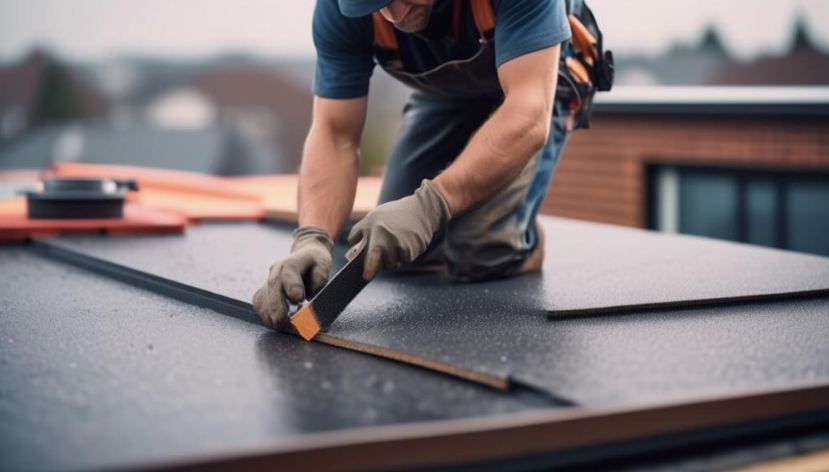
Flat roof installation is one of the most demanding jobs in construction. Unlike sloped roofs that let gravity do the work, flat roofs hold every drop of rain until the water finds an exit — or a leak. One poorly sealed seam, one inadequate slope, or one flashing detail missed can turn that flat roof into a constant source of repairs, mold, and frustration. When installed correctly by a qualified professional, a flat roof lasts decades with minimal problems. When installed poorly, it fails from day one. Understanding flat roof materials, installation methods, and what to expect from a roofing contractor protects your property from costly water damage.
Why Flat Roof Installation Requires Specialized Expertise
Sloped roofs shed water naturally. Gravity pulls rain down shingles and into gutters. Flat roofs have no such advantage. Water sits until it evaporates or finds an exit path. This fundamental difference means flat roof installation demands higher skill levels than sloped roofing. A general roofer may understand shingles perfectly but lacks experience with flat roof membranes, seams, and flashing details.
A specialized flat roof contractor understands ponding water, thermal movement, and membrane compatibility. They know that a seam sealed at 50 degrees Fahrenheit may fail when summer heat reaches 120 degrees on a dark roof. They understand that foot traffic, HVAC maintenance, and debris accumulation all affect flat roof performance. Hiring a roofing company with specific flat roof experience is not optional — it is essential.
Common Flat Roof Materials and Their Characteristics
Different flat roof materials suit different buildings, budgets, and climates. A professional roofing contractor helps you choose based on your specific situation.
Built-Up Roofing (BUR)
Built-up roofing is the traditional flat roof system. Installers layer alternating sheets of bitumen — either asphalt or coal tar — with reinforcing fabrics called felts. The final surface receives a layer of gravel, mineral granules, or a reflective coating. BUR roofs are thick, durable, and excellent at withstanding foot traffic. A properly installed BUR roof from a reputable roofing company can last 20 to 30 years. The downsides are weight — BUR is heavy — and installation odor. The hot asphalt application releases strong fumes.
Modified Bitumen
Modified bitumen is an evolution of BUR. Asphalt is modified with plastic or rubber polymers, then factory-applied to reinforcing sheets. Installers apply these sheets using heat torches, cold adhesive, or self-adhesive backing. Modified bitumen is lighter than BUR and more flexible in cold temperatures. It handles building movement well. A qualified contractor can install modified bitumen on most flat or low-slope roofs. The torch-applied version requires careful fire safety measures — an experienced roofing company follows strict protocols to prevent fires during installation.
EPDM (Rubber Roofing)
EPDM stands for ethylene propylene diene monomer — a synthetic rubber membrane. It comes in large sheets, up to 50 feet wide, minimizing seams where leaks could start. Installers can fully adhere the membrane to insulation, mechanically attach it, or ballast it with loose gravel. EPDM is affordable, flexible in cold weather, and resistant to UV damage when properly formulated. Black EPDM absorbs heat, which can increase building cooling costs. White EPDM reflects sunlight and improves energy efficiency. A good roofing contractor helps you decide which color suits your climate.
TPO (Thermoplastic Polyolefin)
TPO is a single-ply membrane that reflects heat exceptionally well. It is available in white, light gray, and tan. TPO sheets are heat-welded at seams, creating a bond that is often stronger than the membrane itself. TPO is energy-efficient, resistant to punctures, and generally more affordable than EPDM or modified bitumen. However, TPO quality varies significantly between manufacturers. A trustworthy roofing company recommends only proven TPO brands with long track records.
PVC (Polyvinyl Chloride)
PVC is the premium flat roof membrane. It is flexible, strong, and highly resistant to chemicals, grease, and fire. PVC seams are heat-welded like TPO but with even stronger bond reliability. PVC performs exceptionally well on roofs with restaurant exhaust systems, industrial equipment, or frequent chemical exposure. The main drawback is cost — PVC is typically the most expensive flat roof option. A professional roofing contractor can tell you whether the added durability of PVC justifies the higher investment for your specific building.
The Flat Roof Installation Process Step by Step
Understanding what happens during installation helps you monitor quality and communicate effectively with your roofing company.
Tear-Off and Deck Preparation
The first step is removing the existing roof membrane completely. A qualified contractor strips away old materials down to the roof deck. This reveals any hidden damage — rotten wood, rusted metal decking, or deteriorated insulation. The contractor repairs these issues before proceeding. Skipping this step is a major red flag. Any roofing company that offers to install new membrane over old layers without inspection is cutting corners.
Insulation Installation
Flat roofs need insulation for energy efficiency and to create proper slope for drainage. Installers lay rigid foam boards across the deck, often in multiple layers with staggered seams. For roofs that need improved drainage, the contractor uses tapered insulation — boards cut at angles to direct water toward drains or scuppers. A precise insulation installation prevents ponding water that accelerates membrane aging.
Membrane Application
The contractor installs your chosen membrane according to manufacturer specifications. For single-ply systems like TPO, EPDM, or PVC, this means rolling out sheets, overlapping seams, and heat-welding or adhering them. For modified bitumen, this means torching or applying adhesive. For BUR, this means mopping hot asphalt and embedding felts. Each method requires specific techniques. A specialized flat roof contractor has trained crews for each system.
Flashing and Penetrations
Flashing details determine whether a flat roof succeeds or fails. Every penetration — pipes, vents, HVAC units, skylights — needs a watertight seal. Every edge where the roof meets a wall needs proper flashing. Every drain needs a secure collar. A meticulous roofing company spends as much time on flashing as on the field membrane. Rushed flashing work is the number one cause of flat roof leaks.
Final Inspection and Warranty
After installation, the contractor inspects every seam, flashing, and penetration. They perform a water test on many flat roofs — flooding areas with water to confirm drainage and check for leaks. The contractor then provides manufacturer warranties for materials and their own workmanship warranty. A confident roofing company stands behind their installation.
Flat Roof Drainage: The Most Critical Detail
Poor drainage destroys flat roofs faster than anything else. Water that sits for more than 48 hours is ponding water. It accelerates membrane deterioration, adds weight stress to the structure, and provides breeding grounds for mosquitoes and algae.
A qualified flat roof contractor designs drainage into every installation. Tapered insulation creates gentle slopes toward drains. Scuppers — openings in parapet walls — allow water to exit. Interior drains with strainers prevent clogging. The contractor checks that all drainage paths are clear before completing the job.
Choosing the Right Flat Roof Installation Company
Not every roofing company understands flat roofs. Here is what to look for.
Verify Flat Roof Experience
Ask potential contractors how many flat roof installations they completed in the past year. Request photos of completed projects similar to yours. A specialized flat roof contractor has a portfolio of commercial and residential flat work. A general roofer with mostly sloped roof photos is not the right choice.
Check Manufacturer Certifications
Top membrane manufacturers — including Carlisle, Firestone, GAF, and Johns Manville — certify contractors who complete their training programs. Certified contractors can offer enhanced manufacturer warranties. A roofing company that holds multiple manufacturer certifications has demonstrated expertise across different systems.
Ask About Warranties
Manufacturer warranties typically cover material defects for 10 to 30 years. Workmanship warranties from the contractor cover installation errors for 5 to 20 years. Get both warranties in writing. A reputable flat roof contractor does not hesitate to provide warranty documents before you sign a contract.
FAQs
1. How long does a flat roof installation take from start to finish?
A typical flat roof installation takes three to seven business days depending on size, material choice, weather conditions, and whether tear-off of an existing roof is required. A small residential garage roof might take two days. A large commercial building could take two weeks.
2. What is ponding water and why is it bad for flat roofs?
Ponding water is water that remains on a flat roof 48 hours or longer after rainfall. It accelerates membrane breakdown, adds unnecessary weight stress to the structure, and can freeze and thaw repeatedly in cold climates — each cycle widening small cracks.
3. Can I walk on my flat roof after installation?
Yes, but caution is needed. Built-up roofing and modified bitumen with gravel surfaces handle foot traffic well. Single-ply membranes like TPO, EPDM, and PVC are more susceptible to punctures.
4. How do I choose between TPO, EPDM, and PVC for my flat roof?
TPO offers excellent heat reflection at a moderate price. EPDM is affordable and performs well in cold climates but absorbs heat. PVC is the most durable and chemical-resistant option but costs the most. choice.
5. What causes flat roof leaks most often?
The most common leak sources are not the main membrane but the details — flashings around penetrations, seams that failed, drains that clogged, or edges where the roof meets walls. Poor installation of these details accounts for the majority of flat roof failures.